(private information for SCDR AND CBBR)
Desensitisation
Noises
o When our dogs are scared of noises they get startled often and struggle to be a relaxed dog in other situations as well. It is our responsibility to make our dogs feel safe.
o There are two ways of dealing with this. One is to desensitise our dogs to sounds while they are eating or being relaxed.
o Find sounds here: https://www.dogstrust.org.uk/help-advice/dog-behaviour-health/sound-therapy-for-pets
o We play the sounds on the lowest possible volume for as many days as necessary. Only when we are sure our dogs aren’t bothered at all we can turn it up by one nudge, still hardly noticeable for the human hearing. We keep increasing at the pace the dog is happy with.
o The second way to deal with noise sensibility is to create a new involuntary response using classical conditioning. We record the sound or create it ourselves and teach our dogs that whenever they hear the sounds a really yummy treat follows straight after. This exercise would have to be practised with your foster manager to ensure you are getting the timing right.
Vacuum
o Some dogs are scared of the vacuum and with some it triggers their prey drive. Either way we should work on it. We would use similar techniques with lawn movers, brooms or cars:
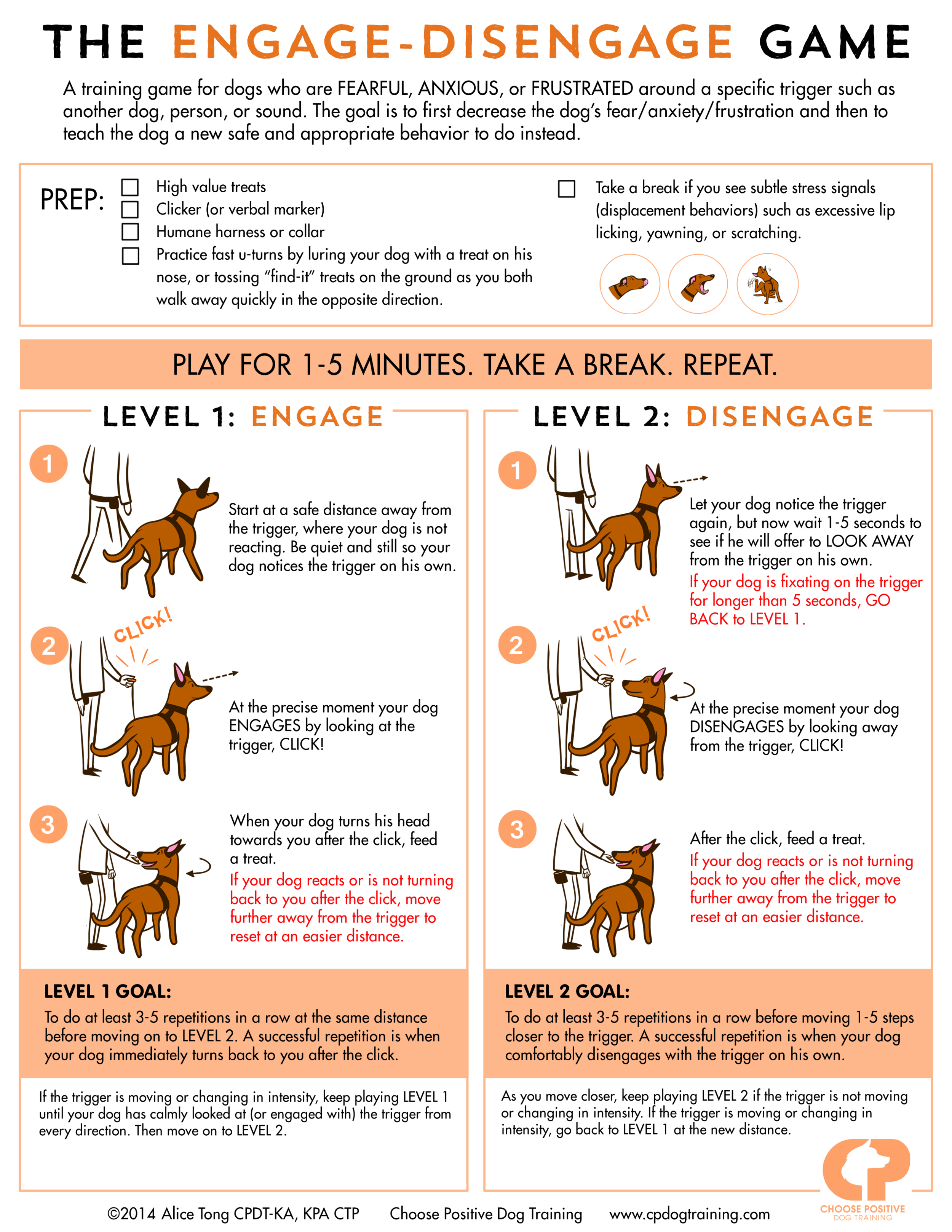
THE ENGAGE DISENGAGE GAME FOR ANY SERIOUS BEHAVIOUR ISSUES ESPECIALLY (DO NOT EVER GO CLOSE, STAY UNDER THRESHOLD)
o A training game for dogs who are fearful, anxious, frustrated or over excited around a specific trigger such as another dog, person or sound. The goal is to first decrease the intensity of the dog’s feeling towards the trigger and then to teach the dog a new safe and appropriate behaviour to do instead.
o Use the BESTEST treats possible, work on a distance your dog can handle, use a back clip harness and say “Yes” as a marker when the graphic asks you to click.
o Follow these steps and only move on when the repetition was successful. There is also no shame in taking a few steps back if needed.