Fun and Focus Level 2 - Week 4
Mat Training
Once our dogs run to the mat and lay down on it whenever we put it down anywhere and stay there until we release them, we can start giving it a cue “On your mat” just before they are going to go there anyways.
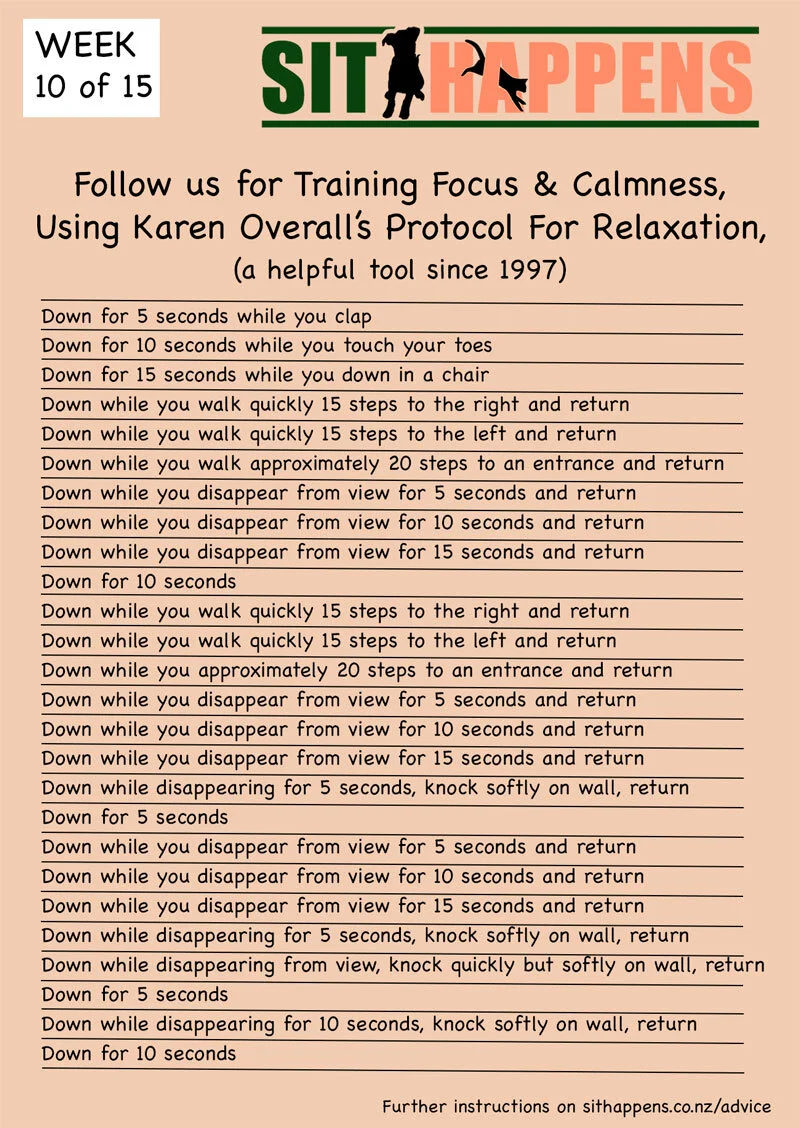
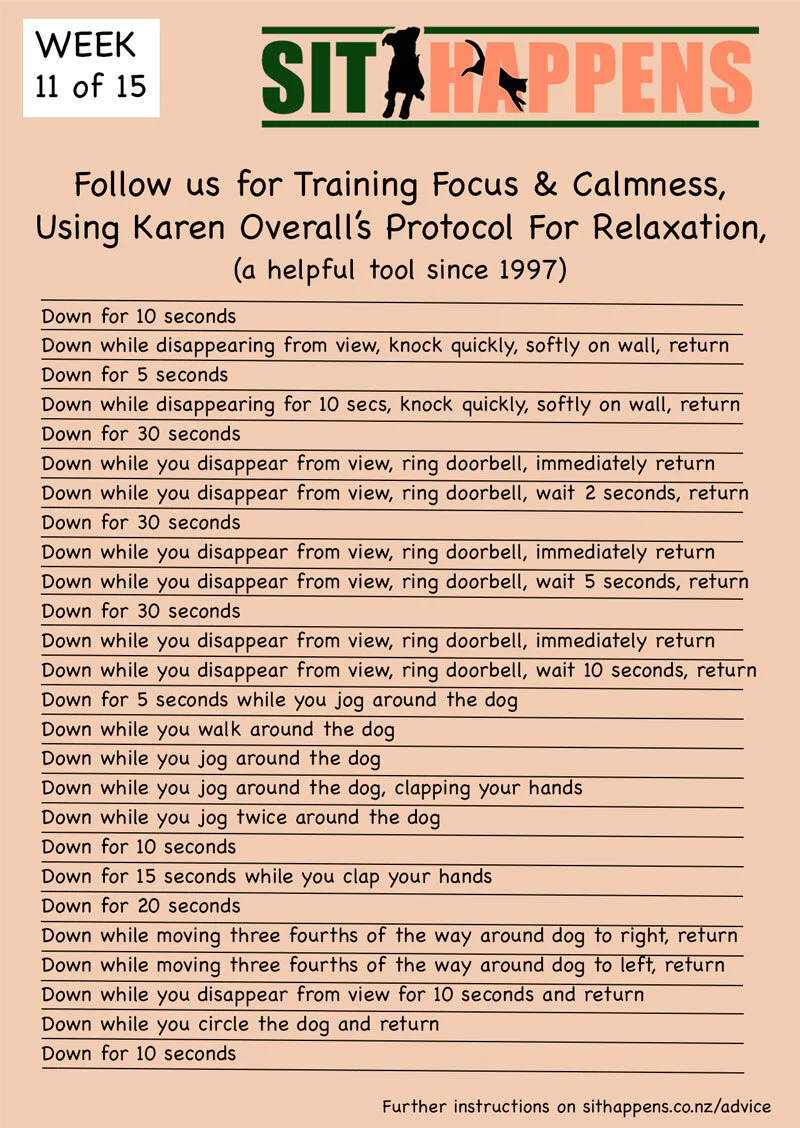
With enough practise your dog will learn what that cue means and you can start mixing things up a bit. Our goal will be to be able to send our dogs to their mat from big distances, even when it’s out of sight. Plus being able to keep them on their mat through the last protocol (number 15) of the Karen Overall Protocols of Relaxation.
As soon as the behaviour is reliably on a cue we can leave the mat laying around and even take it places like cafés or friend’s houses.
Our dogs need to stay on the mat until released if they have been sent there. However, if they choose to go there on their own, they can leave on their own as well. We can transfer the mat to “On your bed”, “In your crate”, “On the blanket”, “On the Spot” or whatever other places you want your dog to learn to go to and lay down on cue.
UNDERSTANDING ACCLIMATION
What Is Acclimation?
Acclimation is when your dog “gets used to” a new environment. The more time a dog has had to acclimate to a new environment, the easier it will be for them to respond to cues. This is important to know when working on a recall; your dog will find it much harder to respond to a recall cue seconds after you’ve let them off leash in a new environment, and much easier when they’ve had time to acclimate to the same environment.
In order to set your dog up for success in the recall training process, it’s useful to give them some acclimation time before you ask for any difficult recalls. For example, keep your dog on their long line for the first five minutes in a new environment, then drop the line after they’ve acclimatised.
HANDLING A FAILED RECALL
Try To Avoid Failure As Much As Possible
As we’ve covered in previous weeks, one of the key parts of building a rock solid recall is to avoid failed recalls as much as you possibly can. Every time you call your dog to come, and they ignore your call then engage with a distraction, they’re being reinforced for ignoring their recall cue. In a perfect world, we’d be able to set things up so that your dog is never in that situation, but in the real world a failed recall is inevitable at some point. Think of our response to a missed recall cue as damage control; we want to take action to ensure the least amount of damage to your recall behaviour. These strategies aren’t designed to replace the content from previous weeks; you should still try to set your dog up for success and prevent failure. This week’s strategies are designed to catch any failed recalls that fall through the cracks.
Worst Case Scenario
The scenario that we want to avoid the most is this one:
You call your dog to come
Your dog ignores the recall and engages with a distraction
The dog enjoys engaging with the distraction and moves on to the next.
This scenario will do the most amount of damage to your recall; the “ignore the recall cue” behaviour was highly reinforced. To avoid this outcome, there are two options available for when your dog missed a recall; we can “save” the recall by encouraging the dog to disengage from the distraction and finish recalling, or we can switch to settling.
Saving A Failed Recall
Attempting to save a recall is the best option if your dog is hesitating or dithering between coming to you and going after a distraction. For example, if you called them and they were looking at you but not moving, glancing over at the distraction. It’s also a good option if they don’t have physical access to the distraction, so they’re not actually going to be reinforced if they decide to go after it. An example is if they were on a long line and you were attempting to call them away from a dog in the distance.
To save a recall, you cheer your dog and otherwise encourage them to complete the recall. Crouch down, use inviting body language, whistle, praise, clap your hands etc - the goal is to be more interesting than whatever your dog is distracted by.
Remember that saving a recall shouldn’t be your first “go to” option - if you’re having to “save” every single recall then you haven’t successfully set your dog up to avoid failure; it’s likely that the environment you’re practising in is too distracting. Take it back a few steps and build up steadily.
Switch to Settling
Our ‘Default Settle’ is a strategy that helps our dog’s minds to reset whilst also not getting the chance to engage with the distraction any further. If you haven’t covered how to teach a Default Settle in a previous Sit Happens class, we can send through the information, please let us know.
Switch to settling is the best option if they fail a recall disastrously; no hesitation, they just utterly ignore you and go after the distraction with 100% commitment. In this type of scenario trying to save the recall is unlikely to be successful, so to minimise the damage to our recall cue and avoid the worst case scenario, we switch to settling.
Put your dog back on a short leash and become stationary a little bit to the side. For example, if you’re working on recalls around birds with your dog on a long leash, and they ignored your call and started pulling on the end of the leash to get to the birds, you could walk up to them and stand/sit still with the leash short until your dog shows some settled behaviour. After the settle you would reduce the intensity of the distraction before trying again (moving further away from the birds would be the easiest way to do this).
Be sure to settle somewhere where your dog finds it fairly boring. If you have them on a short lead but they’re happily snuffling around and enjoying themselves, it’s unlikely they will settle.
As per the previous weeks, you shouldn’t have your dog off leash somewhere with access to distractions until you’re very confident they’ll be successful, but if you find yourself in a situation where they’re off leash and you need to get them onto the short leash for a settle, remember to track them down slowly but steadily, no matter how long it takes. You don’t want to give up because it’s taking too long to catch them. Management is crucial while building a recall.
You should use settling on a failed recall once in a blue moon when things don’t go to plan - it’s not a replacement strategy for training a recall.