Fun and Focus Level 2 - Week 3
DROP
Remember that we don’t want to ask our dogs twice to ‘Drop’ an item, but instead we want to make sure that we only name it if the behaviour is solid.
Over time, once your dog is reliably letting go of their toy as soon as they spot the second toy, we can move on to the following steps:
Say ‘Drop’,
bring the 2nd toy out in front of you, hold it there without waving it around,
as soon as dog lets go say ‘Yes’,
then offer the second toy and say ‘Get it’ and
play with the dog for a good 5-10 seconds as a reward.
If your dog did not let go as soon as they saw the second toy, you moved too quickly to this step. Go back to basics from Level 1 Class of just swapping the 2 toys.
If the above steps are going well, replace Step 2 with the following:
bring the 2nd toy out in front of you but not as far in front as previously), hold it there without waving it around,
If your dog is still reliably dropping and you have practised this a bunch of times, replace Step 2 with the following:
bring the 2nd toy out and hold it visibly by your side without waving it around,
If your dog is still reliably dropping and you have practised this a bunch of times, replace Step 2 with the following:
hold the 2nd toy behind your back,
If your dog is still reliably dropping and you have practised this a bunch of times, replace Step 1 and 2 with the following:
Place the 2nd toy on a furniture piece or wall behind your back, make sure your dog sees both your empty hands,
say ‘Drop’,
If your dog is still reliably dropping and you have practised this a bunch of times, you should now be able to replace Steps 1-4:
Place the 2nd toy on a furniture piece or wall behind your back, make sure your dog sees both your empty hands,
say ‘Drop’,
as soon as dog lets go say ‘Yes’,
then pick up the first toy from the ground and say ‘Get it’
If your dog is not respecting the toy as yours and tries to grab it before you say ‘Get it’, go back to the ‘Get it’ exercise of Level 1 Class, Week 4 and practise that part more thoroughly.
If all these steps are going well, you can now play with just 1 toy. Well done! :)
BUILDING TOY & FOOD REINFORCERS
Timing & Presentation - Reward Rather Than Bribe
When using a toy or play reward to reinforce a behaviour like a recall, timing is just as important as it is when using food rewards. In particular, it’s important to present the toy or start the play after the dog has done the behaviour that you’d like to reinforce, rather than before. This is similar to avoiding “pre-loading” when training with food; you don’t reach for the treat until after you’ve marked the correct behaviour.
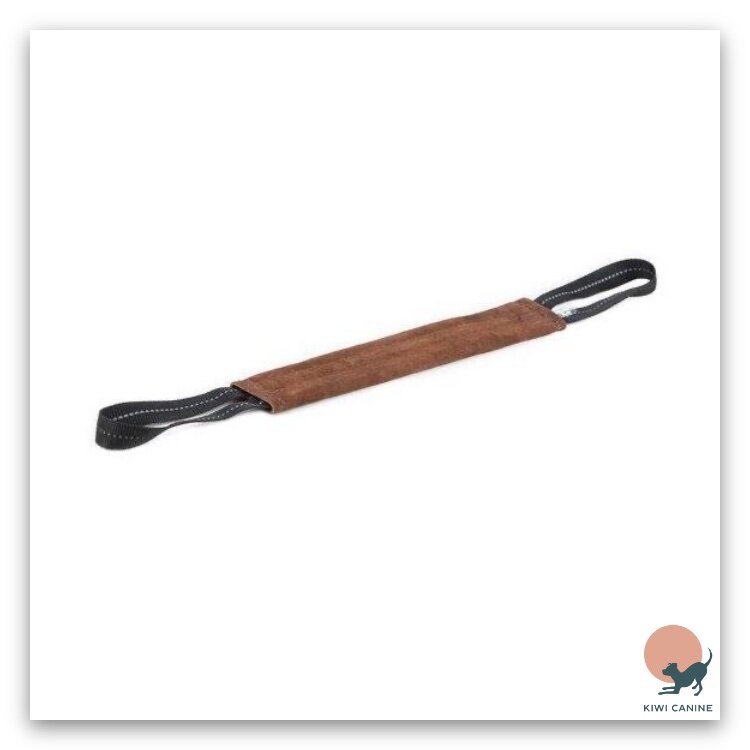
For example, if you’d like to use a tug toy as a reward for a recall, you shouldn’t call your dog to come and then hold the tug toy out and wiggle it around to entice your dog in. If they want the toy, they will come to you, but doing it that way won’t improve your recall in the future - the toy was a bribe not a reinforcer. Instead, call them to come and leave the toy behind your back or inside your jacket right up until you mark the correct behaviour with “yes” and then bring out the toy and invite your dog to tug.
Choosing Toy & Play Reinforcers
Discovering which toy and play rewards your dog is willing to work for can take a bit of experimenting. Some dogs like chase games that involve fast movement and pouncing, others like strength testing games like wrestling and tug, or slower paces games like scent hunting.
Too Much or Too Little - Choosing The Right Intensity
One of the most common problems that people have when using toy and play reinforcers is interacting with their dog with the wrong energy level. Too much energy can overwhelm or intimidate a dog, and too little can make the game boring.
If your dog is a little shy, trying to amp them up with an excessive amount of enthusiasm can put them under pressure and make them uncomfortable. Try lowering your voice and moving a bit slower, and giving them a bit more space.
Trying to engage a dog in play with too little enthusiasm and energy can be detrimental too. For example, simply holding out a tug toy as a reward after a recall won’t be very enticing for most dogs, especially if they don’t have much experience playing tug. Instead, try dragging it erratically over the ground for them to chase, and encouraging them to play with praise and cheering.
Trial some different levels of intensity and see what your dog responds to the best.
Pull Don’t Push - Encouraging Reluctant Players
If your dog is hesitant to play, try to think in terms of pulling your dog’s interest, rather than pushing the game onto them. For example, rather than stalking your dog to try and start a game of chase, encourage your dog to be the chaser. Rather than holding out a tug toy close to your dog’s mouth to try and get them to tug, moving the tug toy away from them to get them to follow it.
A little teasing can be a great way to build toy drive; bring out a toy, make a big fuss over it, but keep it just out of your dog’s reach, then put it away. Keep a couple of “special” toys that your dog rarely gets, and only use them for recall training.
INTERESTING FOOD DELIVERY
All About The Presentation
The value of food reinforcers can be increased by trying out some different methods for delivering them, even for dogs that aren’t overly food motivated. Here are some ideas for varying the method of delivery:
Wiggle the treat as you lure your dog along with it before releasing it
Toss the treat, either up in the air for your dog to catch, or along the ground for them to chase
Scatter a handful of treats for your dog to snuffle around and eat
Feed your dog multiple treats in a row, one after the other
Hide a treat somewhere, then point it out to your dog
Just like with toy rewards, you’ll need to experiment to see what your dog likes best. Don’t use the same method every single recall; variation will keep things interesting for your dog and increase the value of your food reinforcers.
50 Recalls
Complete another 50 recalls without a single failure (reset back to zero every time your dog doesn’t come).